|
|
|
|
Certified Member, American Speech-Language-Hearing Association |
|
|
|
|
Certified Member, American Speech-Language-Hearing Association |
|
|
|
Custom Ear Plugs for Musicians | ||||||||||||||||||||||||||||||||||||||||||||||||||||||||||||||||||||||||||||||||||||
|
||||||||||||||||||||||||||||||||||||||||||||||||||||||||||||||||||||||||||||||||||||
|
Perhaps Bach is your forte. It could be you like to march along with Sousa. Or maybe you just want to bang on your drum all day at ear-shattering volumes. Whatever your taste in music, every musician shares a common problem: your hearing is at risk. Don't think that if you avoid the sheer volume of rock or brass bands that you're in the clear. Even the piccolo generates sound levels up to 112 dB -- roughly equivalent to a jackhammer at 30 feet. This high volume can, over time, result in moderate to severe hearing loss and/or risk of tinnitus (ringing in the ears).
Benefits of Musician's Ear Plugs:
Which Musicians'
Ear Plug is Right for You?
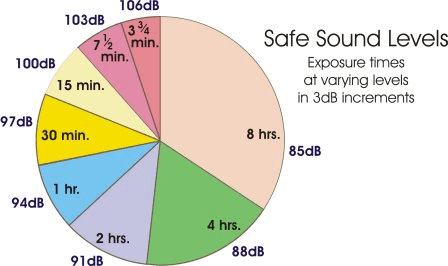
Safe Sound Exposure LevelsNoise-induced hearing loss is a function of exposure time, the average noise level, and the peak level of very loud sounds. Some people seem to be more susceptible to hearing loss than others, so that protection on the basis of an average time and sound level exposure will only protect the "average" person. The following table includes data for the more conservative 85 dB equal energy (EE) approach as well as the U.S. OSHA standard. We assume that at least 10 dB of protection for the ER-15, 15 dB of protection for the ER-20, and 20 dB of protection for the ER-25 is achieved in most ears with these attenuators in place.
Damage to the ear can be caused either by very loud sounds in short duration (such as gunshots) or by moderately high-volume sounds that are longer in duration. The louder the noise, the less time your ears can tolerate exposure to it before some degree of damage occurs. But the diagram reveals the reality about the nonlinear relationship between levels and exposure. With just a 3dB increase in sound levels, the safe exposure time is cut in half … and each subsequent increase of 3dB cuts the safe time by yet another half. |
||||||||||||||||||||||||||||||||||||||||||||||||||||||||||||||||||||||||||||||||||||
|
|
|
|
|
4000 Barranca, Suite 250 (at Culver),
Irvine, California 92604 |


 Hearing Aids

 Whether you're into Mozart or Metallica, if
you ruin your hearing, the music's over.
Whether you're into Mozart or Metallica, if
you ruin your hearing, the music's over.