|
|
|
![]()
|
Your hearing is a valuable component of your everyday life. It is a major factor in enabling you to enjoy the activities you want. Over 24 million Americans today have hearing loss severe enough to affect lifestyle choices. Hearing loss is typically progressive over time. Warning signs of hearing loss may be hard to recognize and are not obvious to the patient. Signs may include changes in behavior, such as avoiding noisy rooms or attending fewer social gatherings. Other people may complain about the patient not listening, or that TV volume is set too loud. |
|
|
|
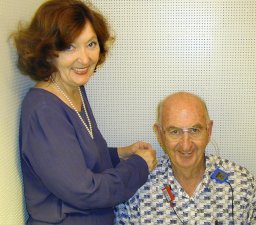
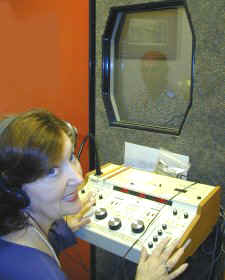
An audiological evaluation is essential to assess any hearing loss and need for hearing aids. The evaluation will measure hearing ability at different frequencies through earphones with the patient in a sound booth, as show to the right. Additional tests include speech discrimination and noise tolerance evaluation. None of these tests involves any pain or discomfort. |
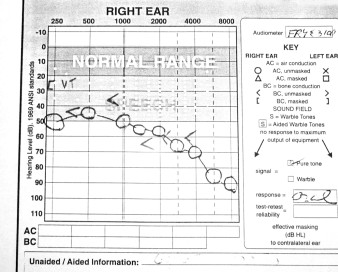
| An Audiogram is
a chart
which records the hearing response of each ear from 250 Hz to 8,000 Hz, which is
the range most essential for speech perception. Hearing response is
unique for each patient.
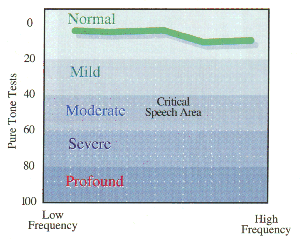
In the audiogram, the horizontal axis shows frequency in Hz. The vertical axis shows hearing loss in decibels (dB). Normal hearing is the 0 dB level. The degree of handicap is considered mild at 20 dB, moderate at 40 dB, severe at 60 dB, and profound at 80 dB. |
|
| The most common type of hearing loss is sometimes called "sensorineural" or "nerve deafness." A common age-related sensorineural loss primarily affects high-frequency sounds. This condition makes it difficult to understand the speech of women and children and leads to confusion of high-frequency consonant sounds such as "sh", "f" and "s." These are the people who say "I can hear, but I just can't understand the words." |
|
|
|
Hearing aids are the most common form of help for a person affected by sensorineural hearing loss. Hearing aids can selectively amplify sounds in each frequency range with hearing loss. Just as eyeglasses must be prescribed specifically for a person's visual loss, so should a hearing aid be custom programmed to provide the best possible hearing improvement. Hearing aids that are inappropriate can lead to frustration and irritation. |
For further information, contact Michele Wilson, Ph.D.
|
|
|
4010 Barranca, Suite 220 (at Culver),
Irvine, California 92604 |